


In Arizona, the ground beneath your feet does more than hold you up. It decides how your outdoor space feels. Choosing between travertine vs. pavers vs. turf in Arizona sets the tone for your whole landscape, and it determines whether your pool deck feels cool and inviting or scorching by 2 PM.
At Lavender Landscape Design Co., surface selection starts with performance. Every stone, slab, and strip of turf has to handle heat, water, and time without losing its elegance. That’s why the best landscapes layer materials, creating contrast, texture, and purpose beneath every step.
Why Surface Choice Matters More in the Desert
Most of the country picks patio materials for looks and budget. Here, you also have to design for:
- Surface heat. Summer sun turns dark, dense materials into griddles. Barefoot comfort around the pool is a real design requirement.
- Thermal movement. Big temperature swings between day and night make slabs expand and contract. Without proper joints, they crack.
- Monsoon water. Long dry spells followed by heavy storms mean drainage has to be engineered, not guessed.
- Alkaline soil and hard water. Mineral deposits and efflorescence show up quickly on the wrong material or the wrong sealer.
Get these right, and the surface disappears beneath you. Get them wrong, and you’ll notice every summer.
Travertine: The Desert Favorite
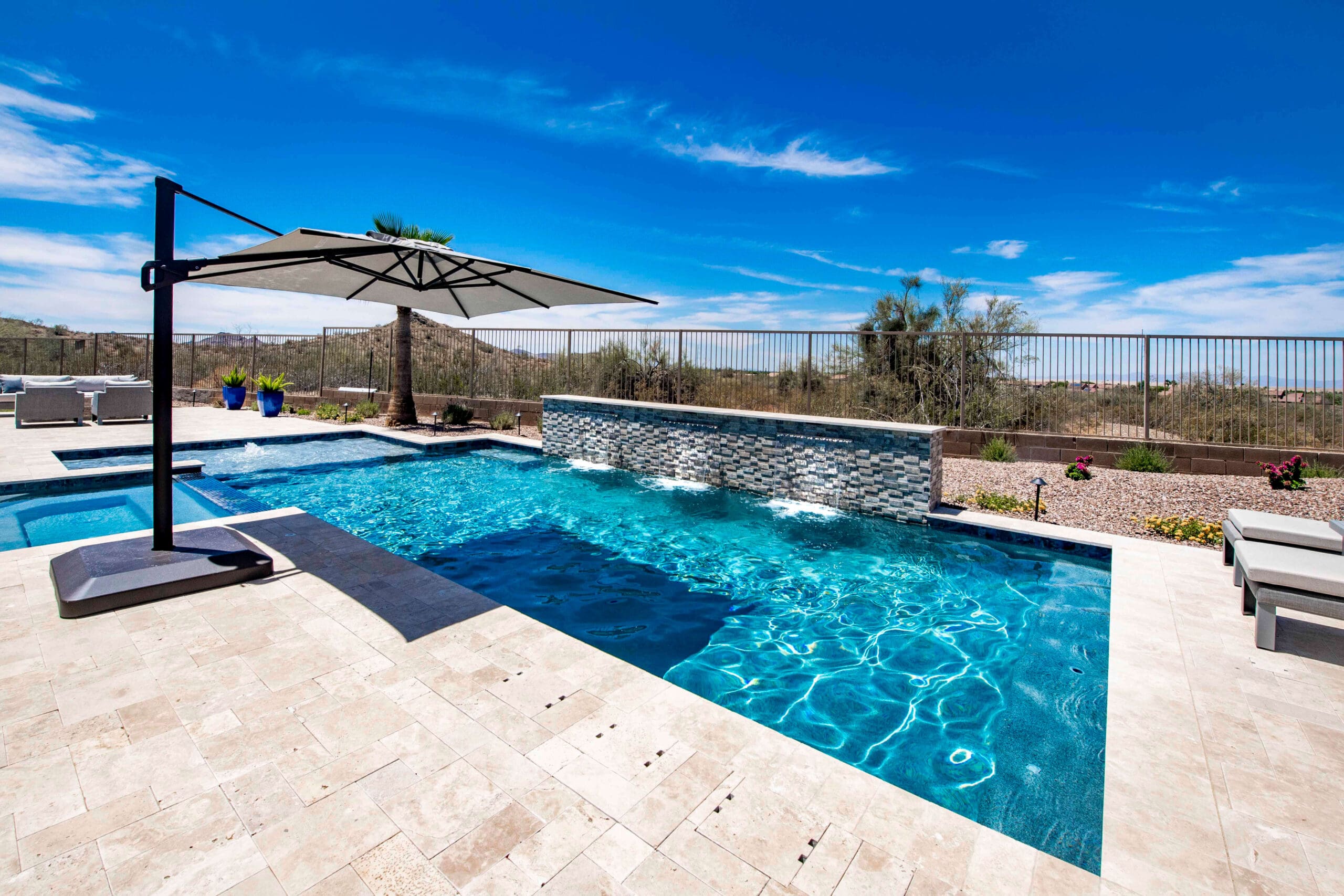
Travertine remains a favorite for high-end outdoor living in the desert, and for good reason. It’s timeless and it’s practical. Its porous composition and lighter color range mean it stays noticeably cooler to the touch than poured concrete or dark pavers on summer afternoons. You feel the difference walking barefoot around the pool or stretching out on a lounge deck.
Why we love it:
– Cooler underfoot than most alternatives in light, honed or tumbled finishes
– Natural, slip-resistant texture when you choose the right finish
– Warm, earthy tones that suit both modern desert and coastal-inspired designs
– Ages gracefully rather than looking worn
What to plan for: Travertine is a natural stone, so it varies in color and pattern. It benefits from periodic sealing, and filled versus unfilled stone behaves differently around salt pools. It also needs a well-prepared base to stay level.
Concrete and Porcelain Pavers: Precision and Durability
Pavers bring structure and consistency.
Concrete pavers offer modern geometric precision, which makes them great for large patios, driveways, and paths. They’re easy to repair (lift one, replace one) and come in many sizes and colors. Lighter tones are important here, since dark concrete pavers can get hot.
Porcelain pavers mimic natural stone and wood with added durability and very low maintenance. They resist staining, don’t need sealing, and hold color well under UV. They’re dense, so we’re careful with color and placement in full sun, and we specify textured finishes for wet areas.
Both are excellent choices for outdoor kitchens and dining areas, where spills and grease are part of life.
Artificial Turf: Green Without the Water
Natural grass in the desert asks for a lot of water and still struggles through summer. Premium artificial turf stays green year-round, needs no irrigation once installed, and gives kids and pets a soft surface to play on. Visually, it softens hard edges and makes a yard feel lush.
The honest caveat: turf can get hot in direct afternoon sun. We handle that with thoughtful placement (shade trees, structures, or areas used mostly in mornings and evenings), lighter-colored or heat-reducing products, and cooling infill options. A quick rinse before play helps on the hottest days, too.
Decomposed Granite and Gravel: The Transitions
Decomposed granite and crushed rock soften the shift between hardscape zones. They add a casual, organic touch that ties modern architecture back to the desert’s natural texture, and they let water soak in instead of running off. They’re ideal for side yards, garden paths, and borders around planting beds.
Travertine vs. Pavers vs. Turf in Arizona: Side-by-Side
| Surface | Barefoot comfort in summer | Maintenance | Best uses |
|---|---|---|---|
| Travertine (light, honed/tumbled) | Excellent, among the coolest options | Periodic sealing | Pool decks, lounge patios, courtyards |
| Porcelain pavers | Good in light colors | Very low | Outdoor kitchens, dining, modern patios |
| Concrete pavers | Fair to good, depends on color | Low, easy spot repair | Large patios, driveways, walkways |
| Artificial turf | Can get hot in direct sun | Low, periodic brushing and rinsing | Play areas, dog runs, green accents |
| Decomposed granite / gravel | Not for bare feet | Occasional raking and topping | Transitions, paths, planting borders |
The Magic Is Where Materials Meet
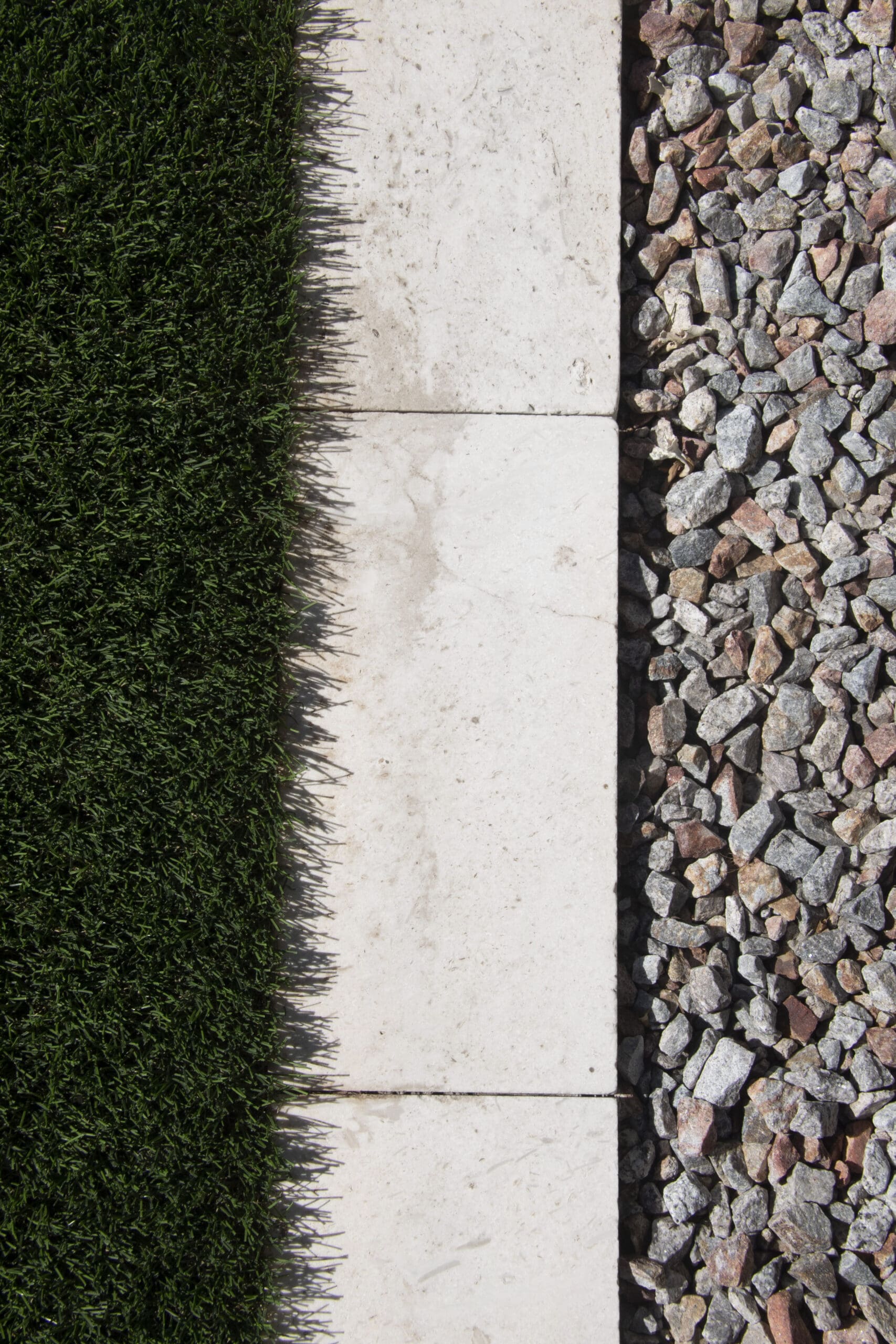
The best Arizona backyards rarely use just one surface. The magic lies in how materials meet. Alternating stone and turf strips create visual rhythm and let water soak through. A pool deck might fade from solid travertine into decorative gravel borders, framed by planters or lighting. Even subtle shifts in texture, like smooth stone meeting rough rock, add luxury through contrast.
A few combinations we return to often:
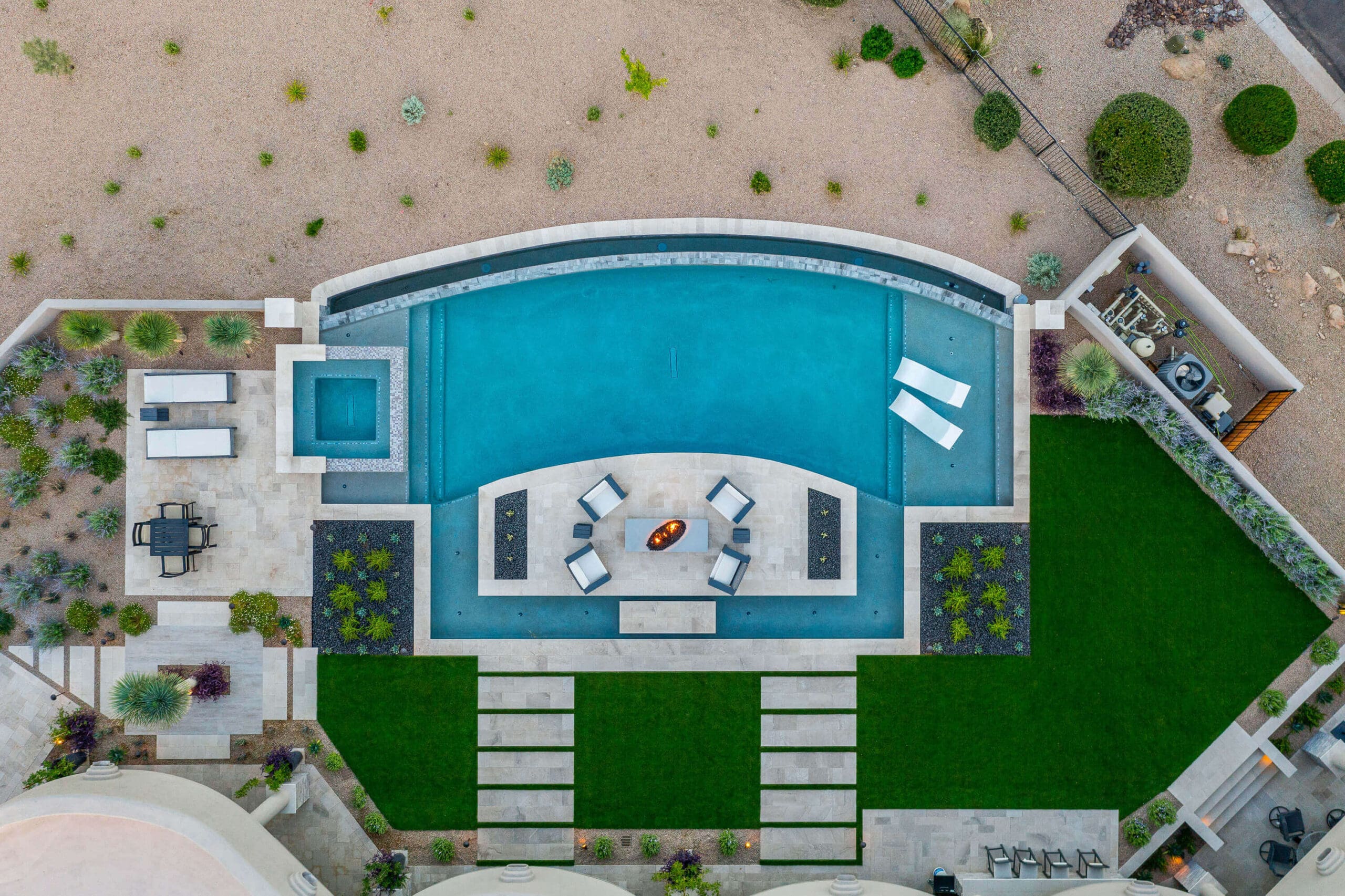
- Travertine pool deck + turf lawn + gravel border for a resort feel that stays practical
- Porcelain kitchen and dining terrace + travertine around the pool to separate “work” and “play” zones
- Pavers with turf joints on a driveway or courtyard to soften a big hardscape area
If you love layered, lush looks, our guide to flowering plants for Arizona landscapes pairs well with these surfaces.
Performance Details You Don’t See (But Feel)
Design isn’t only about beauty. It’s about performance:
- Lighter hues reduce surface temperature.
- Engineered drainage with proper slope and drains prevents pooling and protects your foundation during monsoon storms.
- Expansion joints protect large slabs from cracking under heat stress.
- Compacted base preparation keeps pavers and stone level for years.
- Integrated lighting keeps paths safe and beautiful after dark.
When the details align, with precise leveling, perfect spacing, and seamless transitions, the surface disappears beneath you and leaves only the experience: grass underfoot, cool stone against bare skin, and the quiet glow of path lighting guiding every step.
What Drives the Cost?
Rather than quote a single number, here’s what moves your budget up or down:
- Material choice and grade (natural stone vs. manufactured pavers vs. turf quality)
- Square footage and the complexity of the pattern or layout
- Demolition of existing concrete or decking
- Base preparation, grading, and drainage needs
- Borders, steps, coping, and transitions between materials
- Access to the backyard for equipment
Your design team can price these side by side once there’s a plan. See how we’ve combined surfaces on real projects in our portfolio, or learn about our design-build services.
Frequently Asked Questions
What is the coolest pool deck material in Arizona?
Light-colored travertine in a honed or tumbled finish is one of the coolest options underfoot. Its porous structure and pale tones reflect heat rather than holding it the way dark concrete or dense materials can. Light porcelain pavers are another good option. Whatever you choose, color is the biggest factor in how hot a surface feels.
Is artificial turf a good idea in Arizona?
Yes, when it’s placed well. Turf saves water, stays green year-round, and gives kids and pets a soft surface. It can get hot in direct afternoon sun, so we place it near shade or in areas used mornings and evenings, and use heat-reducing products or infill where possible.
Are porcelain pavers better than travertine?
Neither is better across the board. Porcelain is more stain-resistant and needs no sealing, which makes it ideal for outdoor kitchens and dining areas. Travertine is typically cooler underfoot and has a natural warmth that many clients love around pools. Many of our designs use both in different zones.
Can I mix travertine, pavers, and turf in one backyard?
Absolutely, and we recommend it. Mixing surfaces defines zones, adds texture, and helps with drainage. The key is planning transitions carefully so heights, edges, and joints line up cleanly. That’s where design-build coordination makes a visible difference.
Build a Backyard That Feels as Good as It Looks
The foundation of a great outdoor space isn’t just what’s beneath your feet. It’s how it feels to stand there. If you’re weighing materials for a new pool deck, patio, or full remodel, schedule a design consultation. Your design retainer is credited dollar-for-dollar toward construction when you build with Lavender. For more on beating the heat, read our Arizona summer backyard design guide. Getting started is easy: a call with our client coordinator and an initial in-office consultation are both complimentary, and on-site consultations require a $250 deposit that’s credited toward your design.


